
Don't, not and stop never make it into the picture. Why telling yourself what not to do makes it happen more, what it does to how you feel in the water, and how to flip it.
Try something before you read any further.
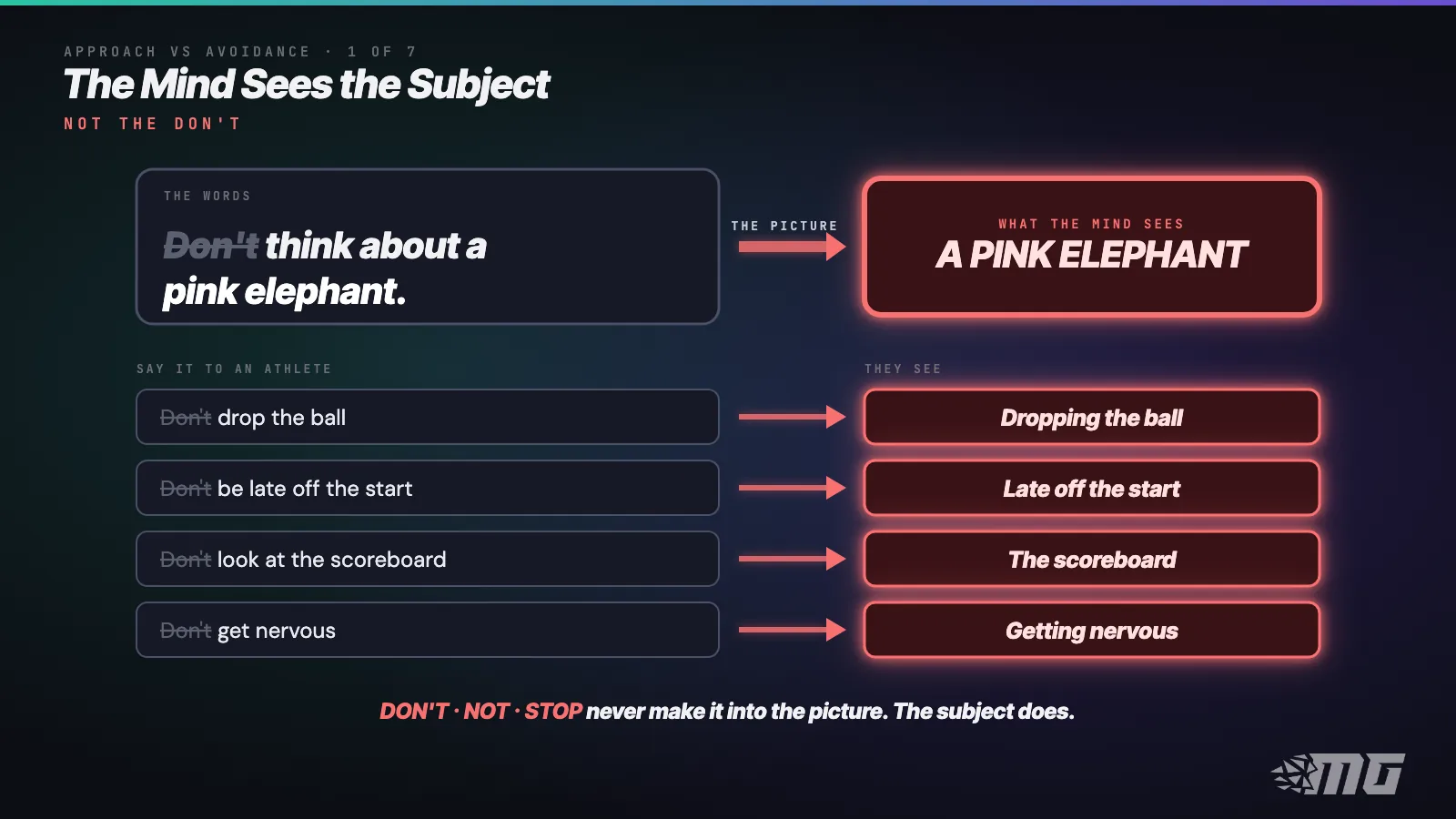
Don't think about a pink elephant.
You saw it. Pink, big, probably flapping its ears. You saw it because I told you not to. Hold on to that, because it explains a lot of what happens to you in the water.
Here is the fact: your mind sees the subject of a sentence, not the don't, not or stop in front of it. Those little words do not make a picture. The subject does.
So when you tell yourself don't miss the wall, the picture your brain makes is the wall, missed. Don't breathe off the wall makes a picture of breathing off the wall. Don't die on the back half makes a picture of dying on the back half.
You meant the opposite. Your brain only got the picture.
This is where it stops being a word trick and starts costing you time.
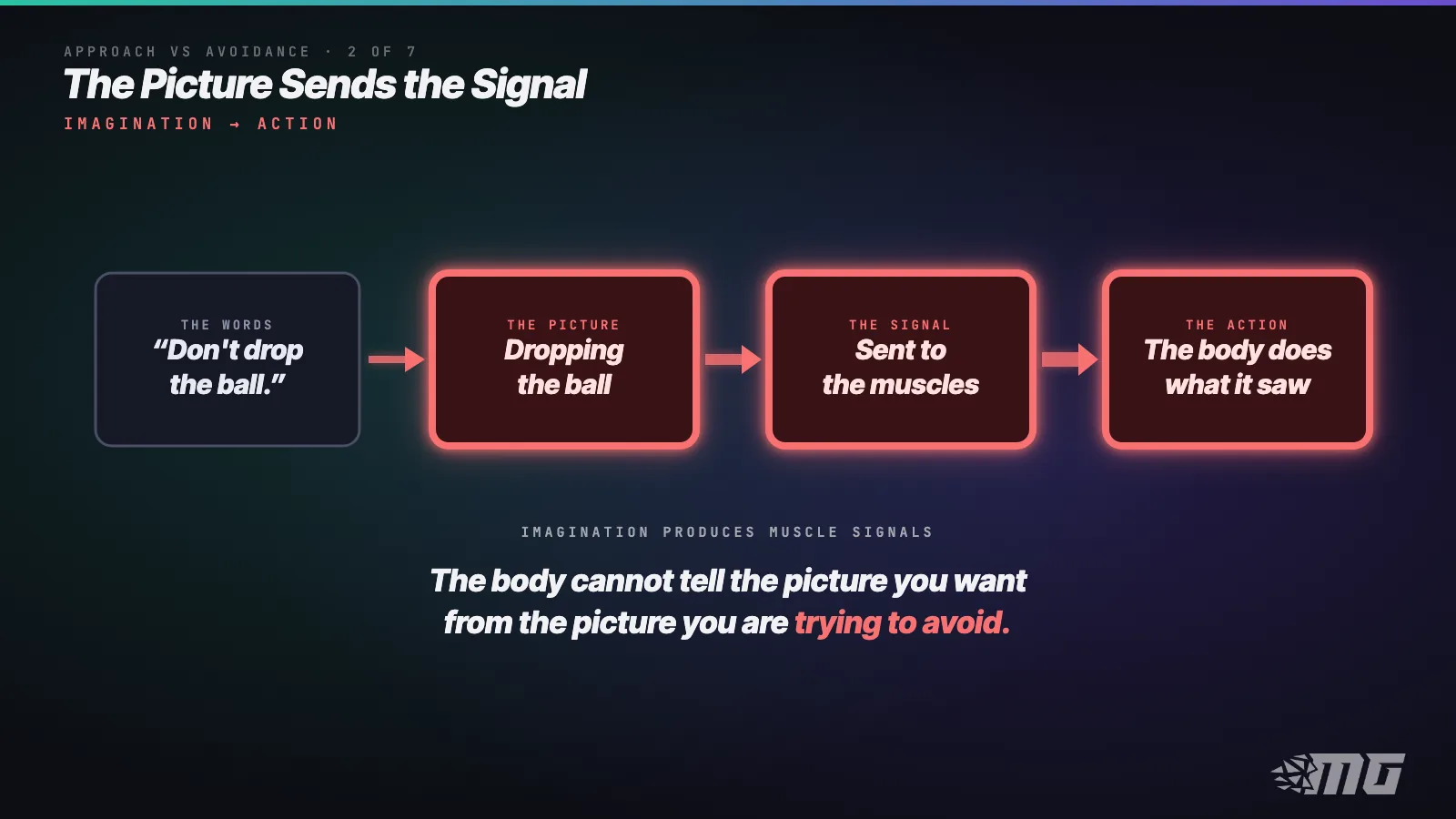
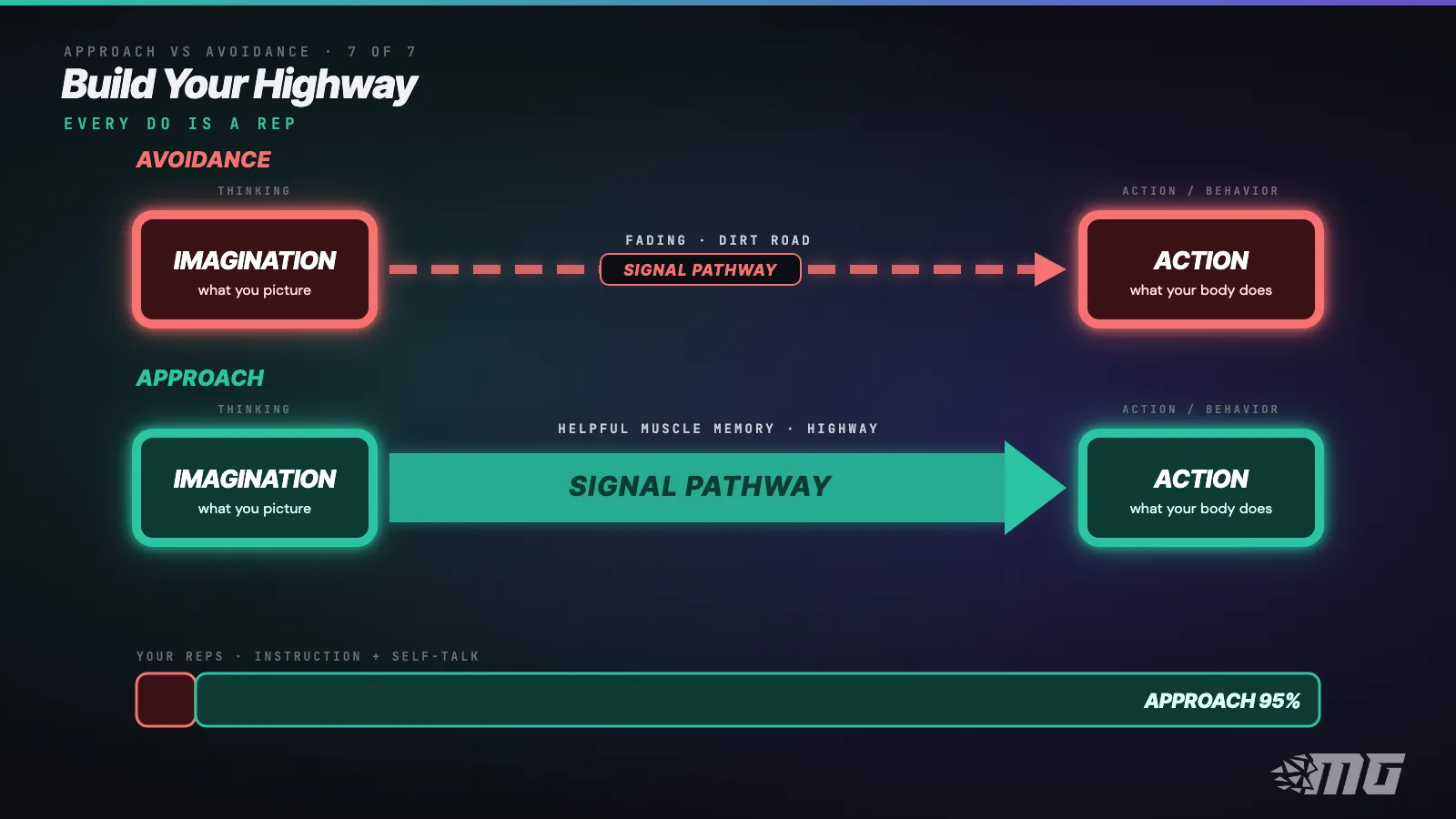
The picture in your head sends a signal to your body to do what it sees. Imagining a movement fires the same signals the movement uses. Your body does not check whether the picture was something you wanted or something you were trying to avoid. It sees it, and it starts to move toward it.
So don't drop your elbow, said to yourself on the wall, is a picture of a dropped elbow, sent to your arm a few seconds before you push off.
Now think about a whole season of that.
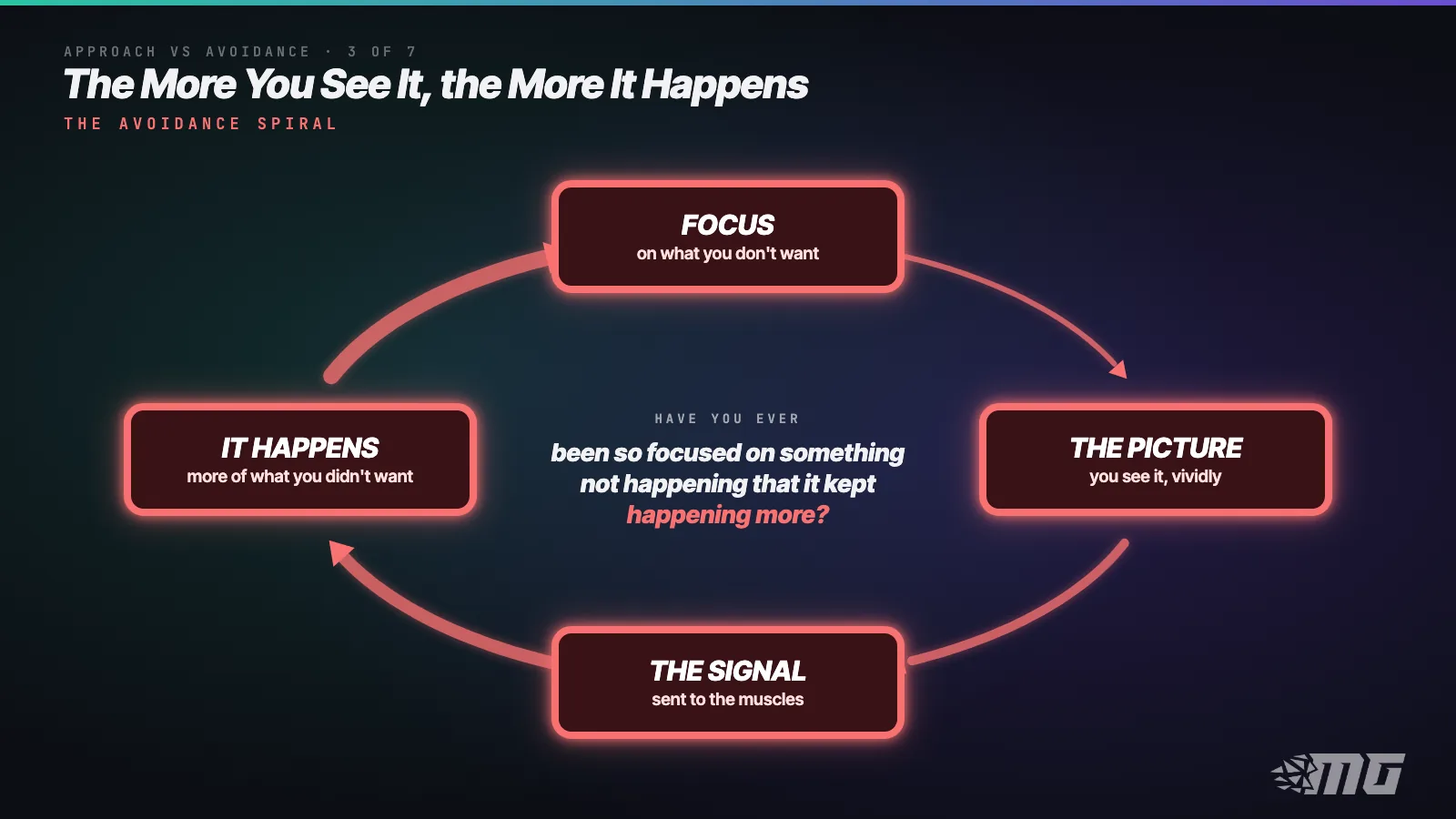
The more you focus on what you don't want, the more you see it. The more you see it, the more signals your body gets to do it. The more signals it gets, the more the thing you don't want actually happens, and then you focus on it even harder.
Have you ever been so focused on something not happening that it kept happening more and more? The turn you kept telling yourself not to blow. The breath off the wall you have been trying to stop for a month, that now shows up on every wall.
That is not you being bad at swimming. That is exactly how this works. Researchers have watched it happen: golfers told not to hit the putt past the hole were more likely to hit it past the hole, especially under pressure. A meet is pressure.
Quick test. What's your goal for your next race? What are you looking to do when you get up on the blocks?
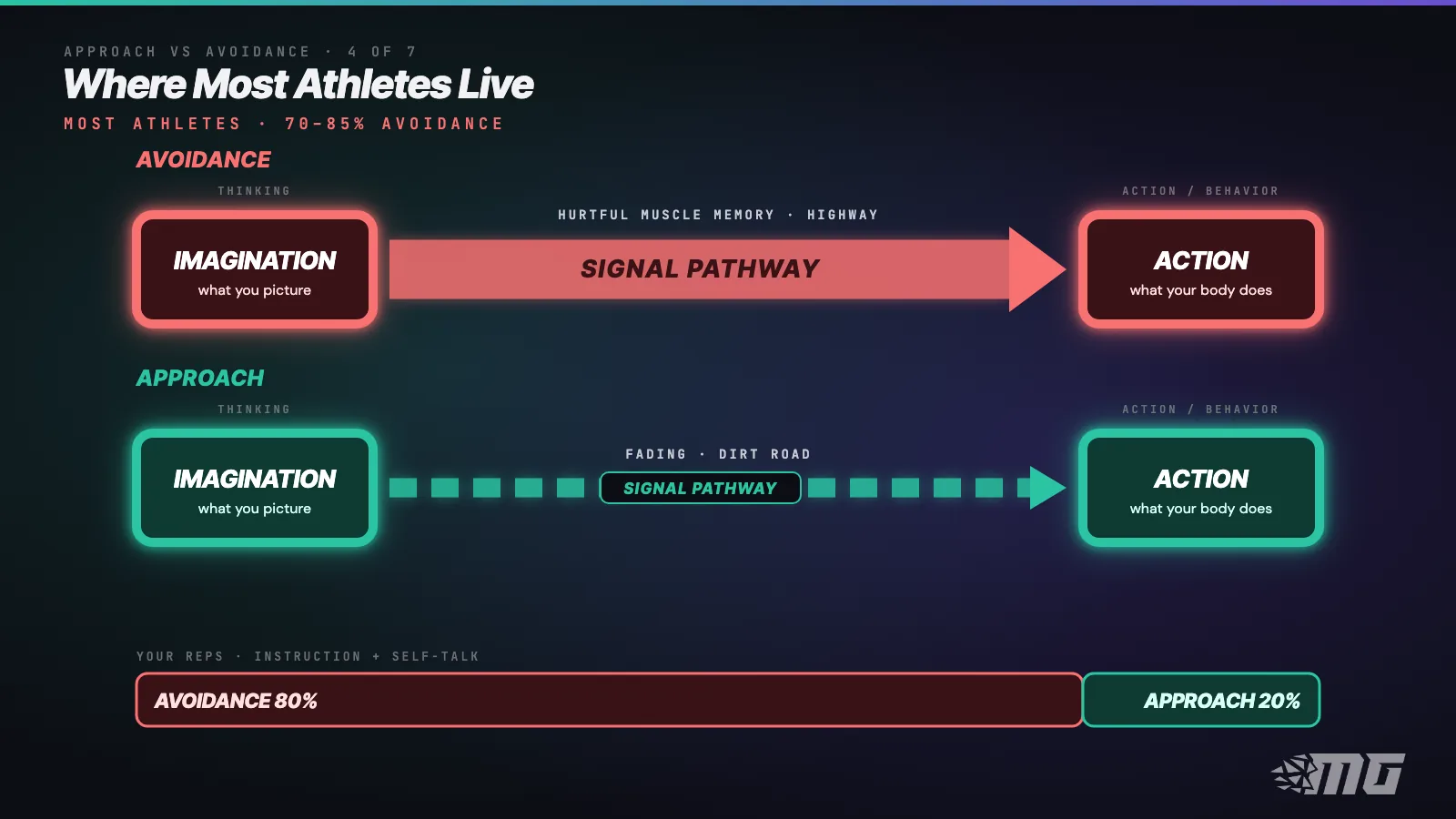
If your answer came out as a list of don'ts (don't die in the last 50, don't breathe on the breakout, don't add time), you are in good company. A lot of swimmers know exactly what they don't want and have never really been asked what they do want.
That is not your fault. It is the language most of us grow up hearing. But every don't you say to yourself is a rep, and a path in your brain grows with use. Run enough reps on the don't road and it becomes the highway.
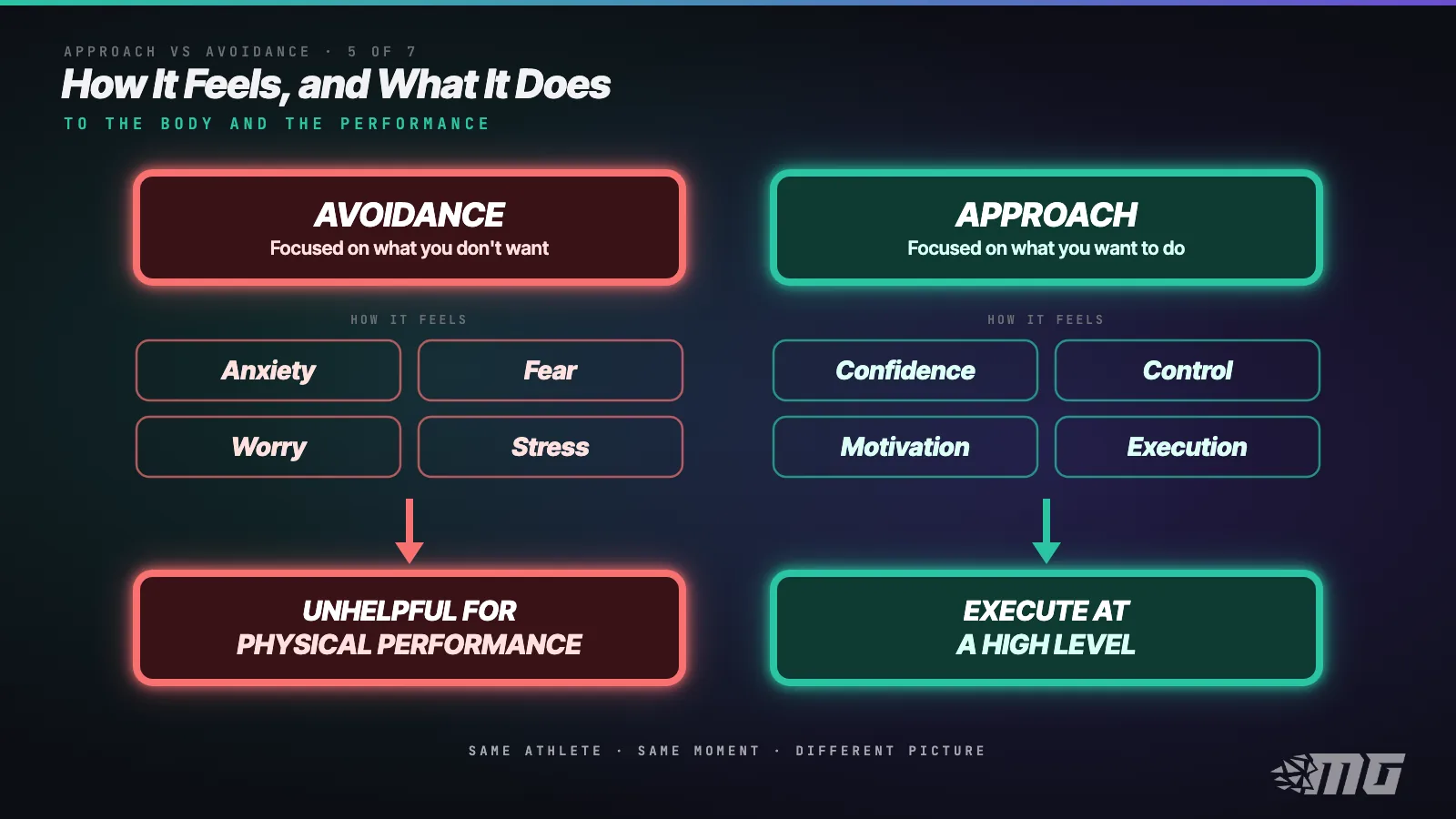
The picture does not only steer your body. It decides how you feel when you race.
When you are focused on what you don't want, you get anxiety, fear, worry and stress. None of those help you swim. Your stroke gets short and tight, because your body is busy steering away from something.
When you are focused on what you want to do, you get confidence, control, motivation and execution. That is the version of you that swims fast.
Same swimmer. Same race. Different picture.
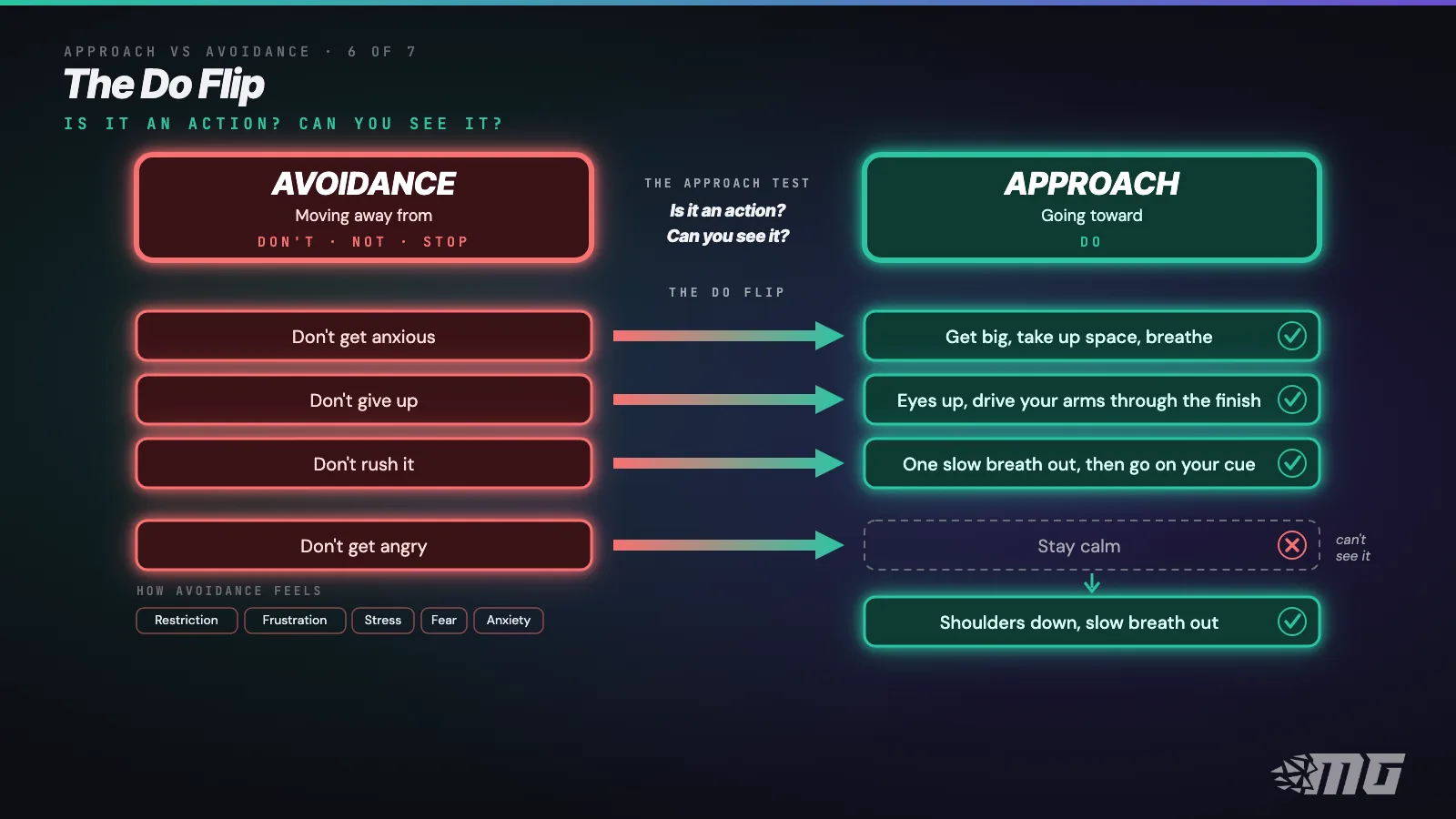
Every don't has a do behind it. Your job is to find it, and there is a trap halfway there.
Don't die on the back half → finish strong is not a flip yet. "Finish strong" is a result, not something you can do. You cannot picture it, so it sends no clear signal.
A real do passes two tests: it is an action, and you can see yourself doing it. Usually it is one of the skills that make you fast when you do them well.
The don't → the result in disguise → the do:
Every do you say to yourself is a rep on the other road. So is every do you ask for.
When a coach, a parent or you yourself hands you a don't, you have a line for it, and your coaches are learning it this month too:
"I know what you don't want me to do. What do you want me to do?"
That is not talking back. It is you asking for the picture your body needs. Ask it, then keep the answer.
The Do Flip Card has the two tests on it and space for the most important part: your don'ts, flipped into your do's, in your own words.
Write down the three don'ts you hear most in your own head. Flip each one until it passes both tests. Keep the card in your swim bag, and read your do's before you get in.
Your body swims what it pictures. You get to choose the picture.
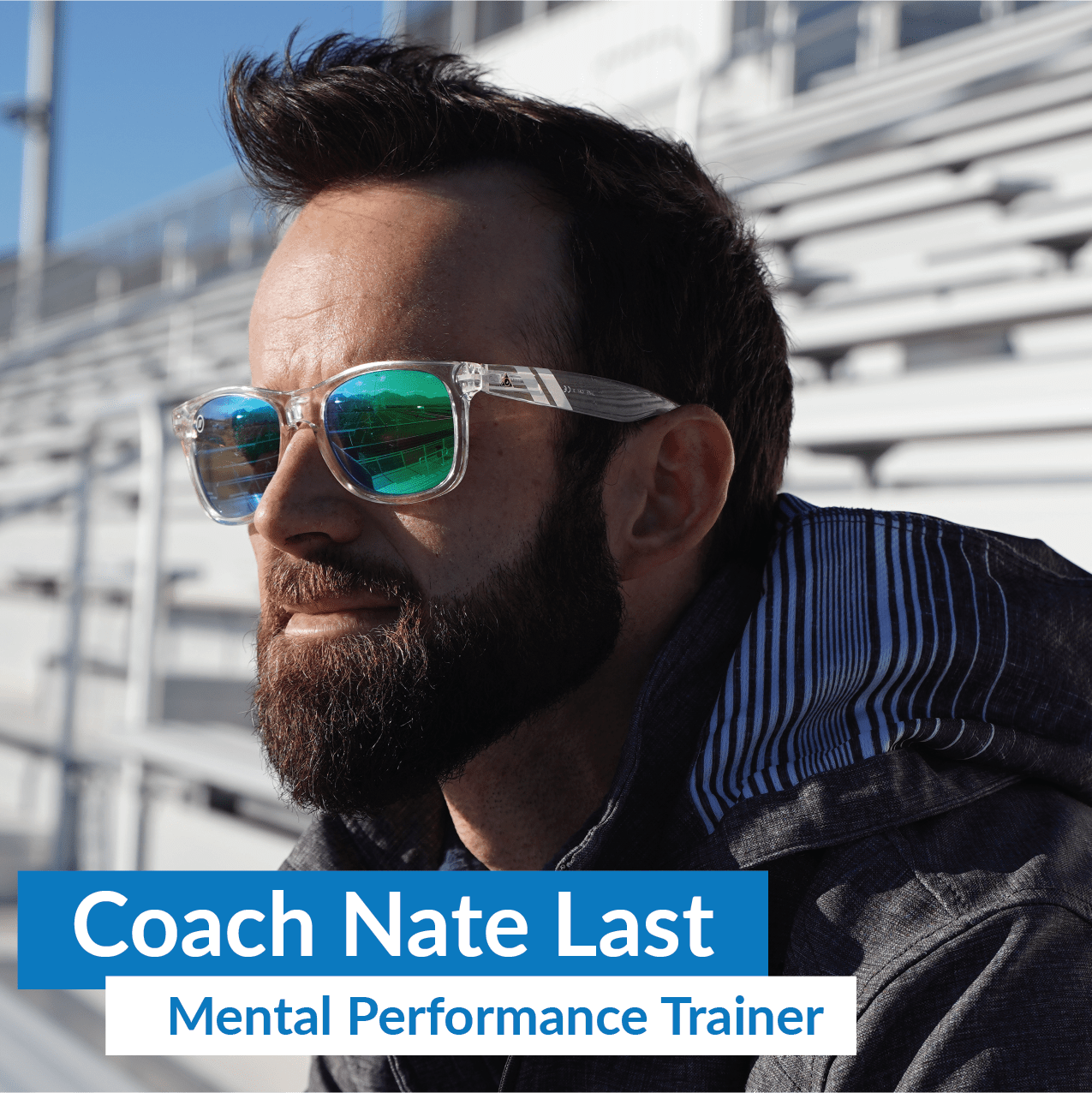
Nate is Utah Swimming’s Official Mental Performance Partner. He works with age-group and elite athletes on the part of the sport nobody schedules — confidence, composure, focus, and what happens in your head behind the blocks. Everything here is free to Utah Swimming families and coaches.

One mental-performance tool for athletes, parents, and coaches — every month in the Utah Swimming newsletter.
Mental Grit provides mental performance training, not mental health care. When a need is clinical, we connect families with licensed professionals.
Mental Grit Consulting is an independent organization and the official mental performance partner of Utah Swimming.