
After a hard race or a rough practice, the car ride home matters more than one evening. Get curious first, validate the hard thing, then ask what they need.

Their perspective is their reality.
The race is over, and it did not go the way they wanted. Your swimmer gets in the car, drops the bag at their feet and looks out the window. A mile down the road, quietly: "That sucked."
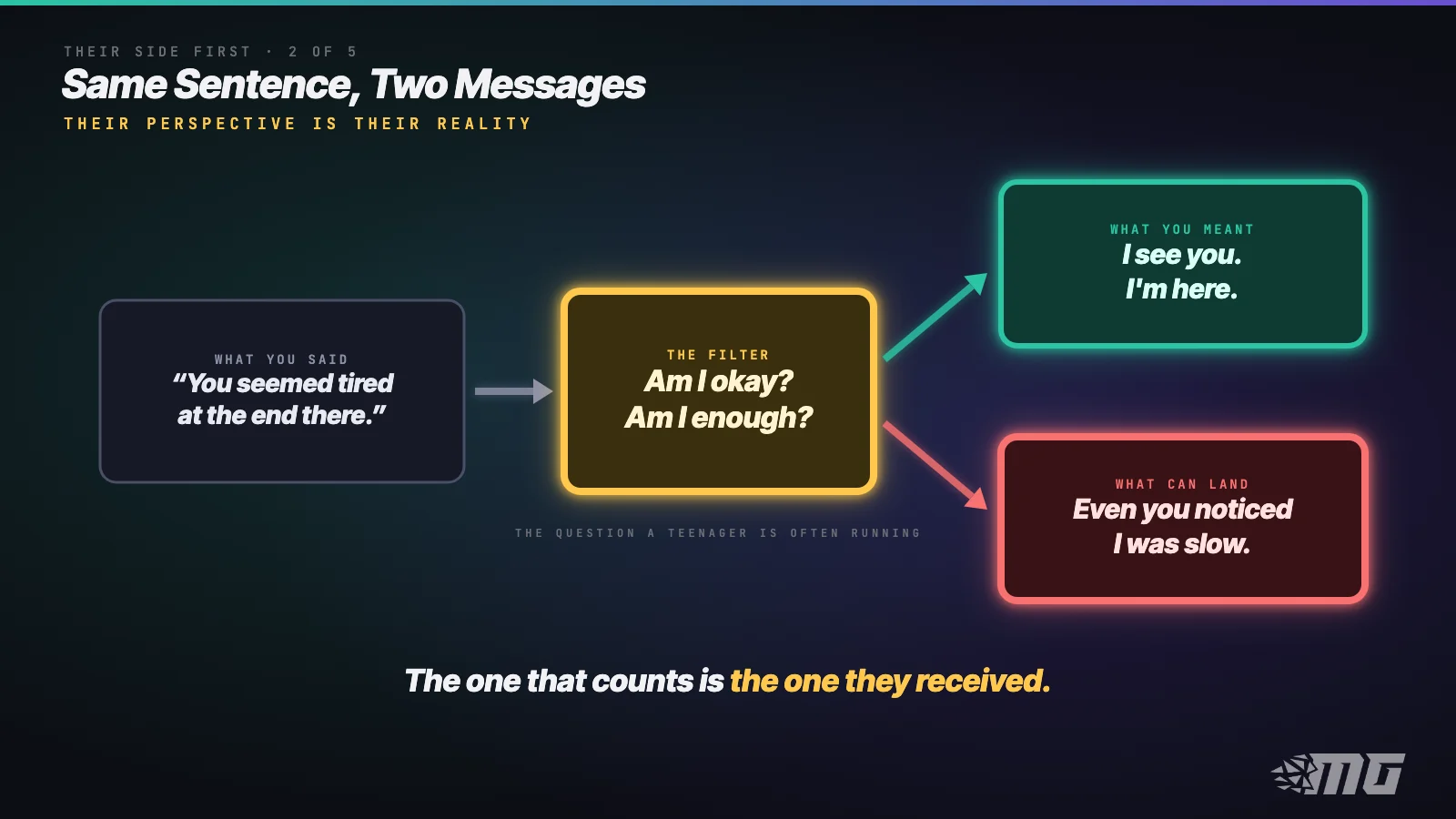
Every part of you wants to help. So out it comes: "You'll get it next time. Your turn was great, though."
What you meant: I love you, and one race doesn't define you.
What can land: So everything except the turn was bad.
Same moment, two completely different messages. And the one that counts is not the one you sent.
This article is about that car ride, after a hard race, a rough practice, any day it went badly, and the three things to do before you do anything else.
When the talk after a hard swim becomes a habit (the breakdown, the opinions, the questions), your swimmer learns what is coming. And teenagers are still learning to control their imagination: it can take them back to what already happened, or ahead to what might.
So in the middle of a race, after a missed turn or a slow first fifty, the mind can leave the pool for the car. Right there, in the middle of it, they play out the scenario of what is going to be said on the ride home, completely taking them out of the race mentally.
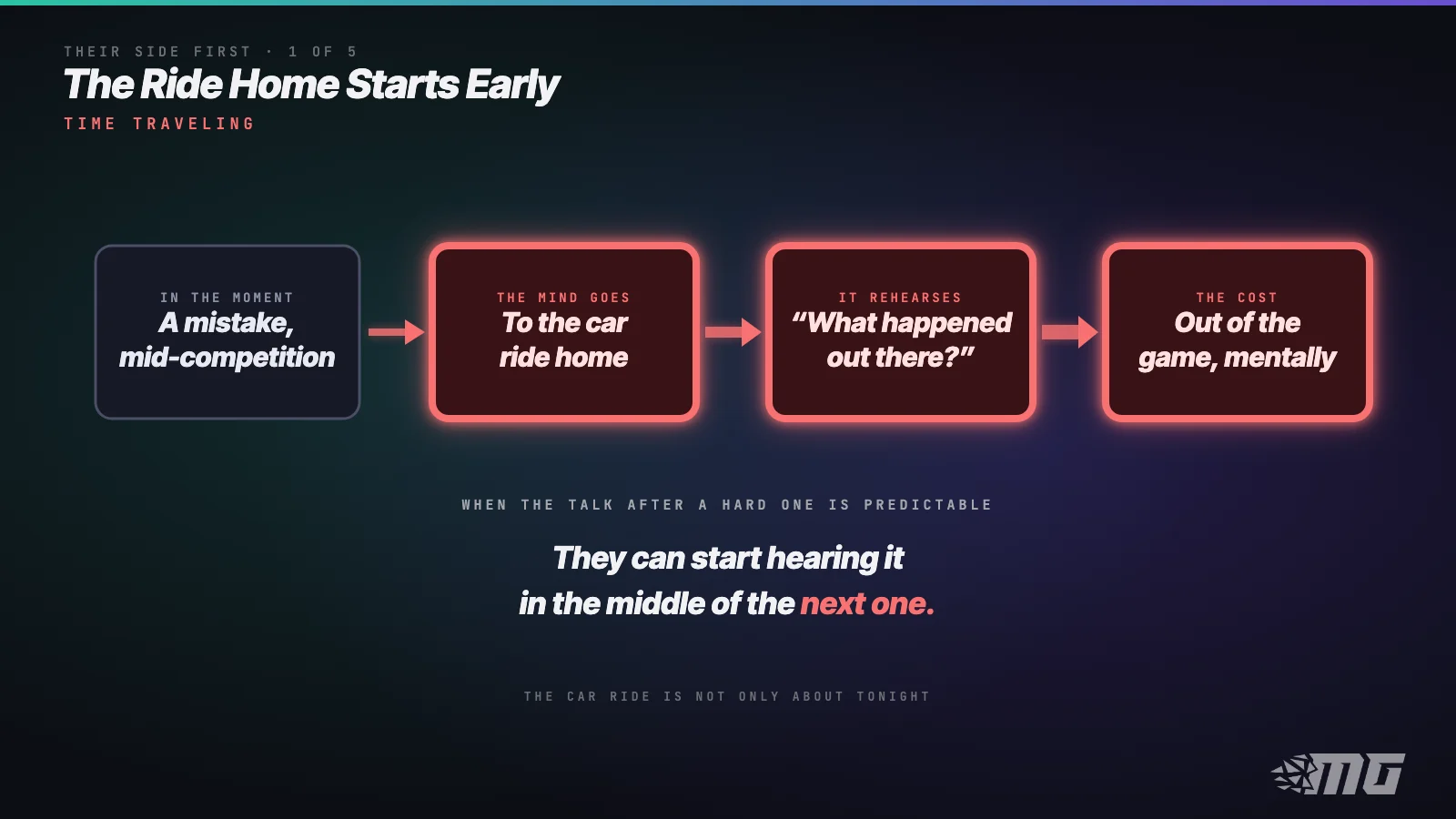
That is why the car ride matters so much. It is not one evening. It is what they expect after every race, and they carry that expectation onto the blocks.
What changes it is a promise with two halves: whatever happens in the water, they are still good enough in your eyes, and there will be a time to look at the race calmly and learn from it. Just not in the car.
This is the first idea in the Performance Parent Playbook, and everything after it rests on it: what your swimmer experiences is what is real for them, whatever you intended.
That is not a judgment of you. You can say exactly the right thing for exactly the right reason and it can still land sideways, because it arrives in a fifteen-year-old head that can be quietly running one question much of the time: am I okay, am I enough? Through that filter, "you're so much better than her" can sound like "so if I lose to her, you'll be disappointed." A compliment, heard as a condition.
And your words carry. A swimmer's inner voice is not invented from nothing: some of it is assembled from the voices they hear most, and yours is one of them. The lines that land, especially the ones that land hard, can turn into lines they say to themselves on the wall in the middle of a set.
That is not something to feel guilty about. It is leverage. You cannot control the filter. You can start on their side of it.
So, back to the car. "That sucked." "Everything was terrible." "I'm so slow."
The instinct is to fix it, explain it, or talk them out of it, and all three answer a question they have not asked yet. Before you help with anything, find out what it was like for them. There are three steps, and the order matters.
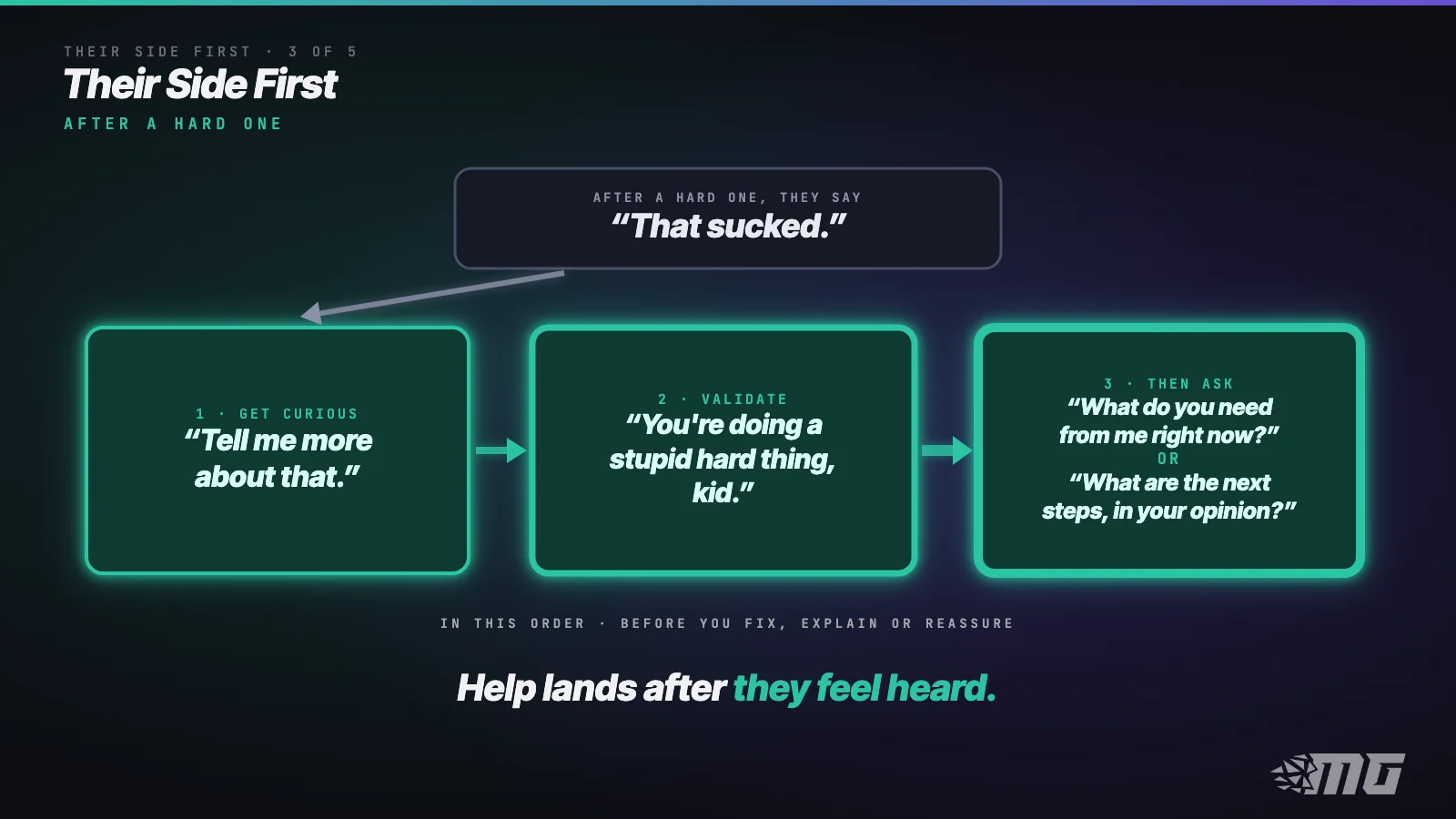
1 · Get curious. Find out what is actually going on for them:
These are not questions about the race. They are questions about your swimmer. You are not analysing what went wrong; you are getting on their side of it.
2 · Validate the hard thing. Whatever they say, let them know it makes sense that it feels the way it does. They just did something hard, in public, that they care about.
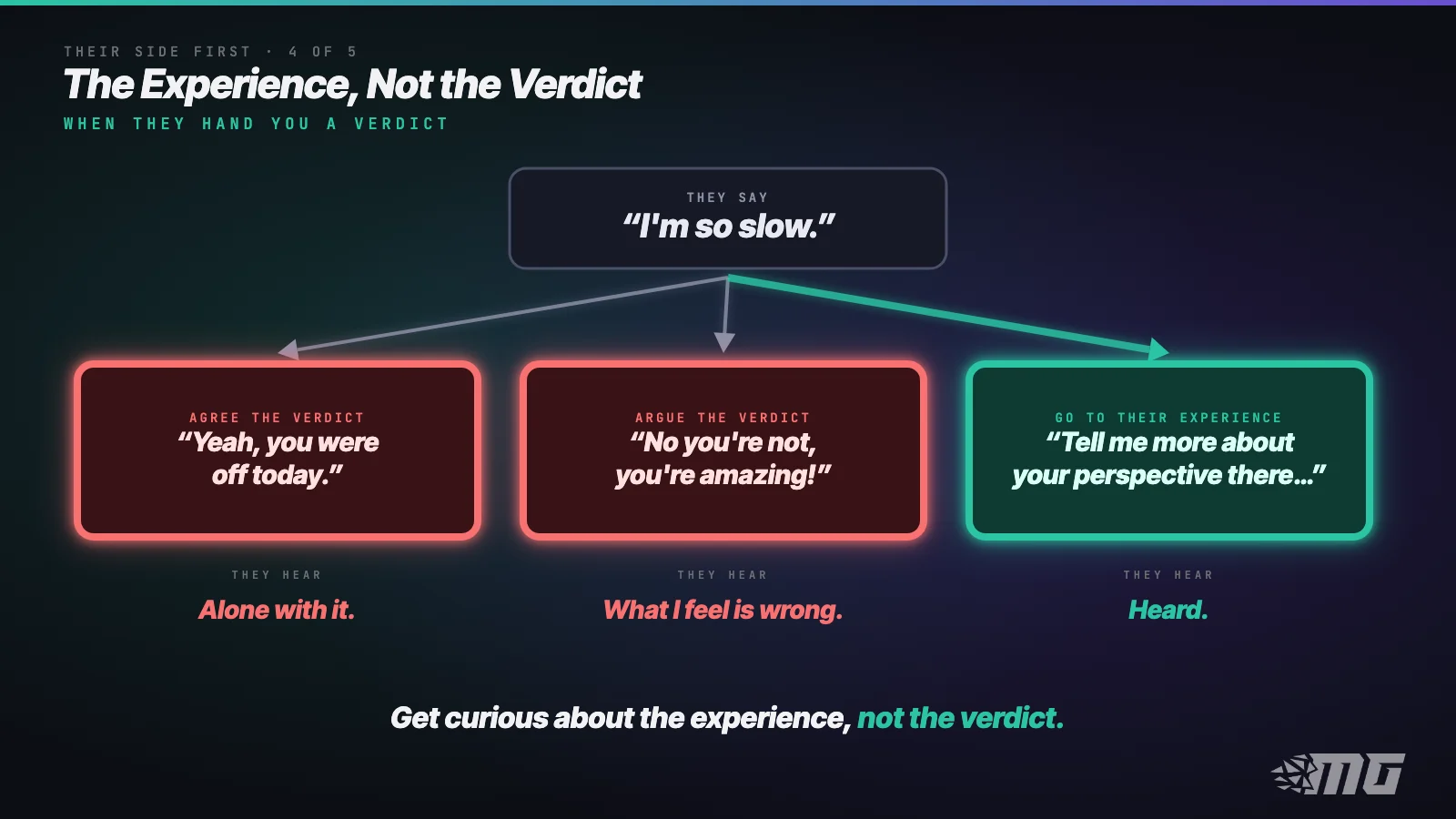
Validating is not agreeing that they are slow, or that the season is over. You are validating the experience, not the verdict.
So when what they hand you is a verdict, "I'm so slow," don't agree with it and don't argue with it. Go to their experience: "Tell me more about your perspective there…" Arguing, "No you're not, you're amazing!", however kindly meant, tells them that what they are feeling is wrong. That rarely lands, and the hard thought tends to come back louder.
3 · Then ask what they need. Only after you have listened and validated:
Then give them that. Often it is food, sleep or quiet, and that is a real answer. If it is "nothing," nothing means nothing: no opinions and no follow-up questions. If they want to talk more, that is a gift. Let them lead it.
It will. You are human, and you will say something that lands sideways again this week.
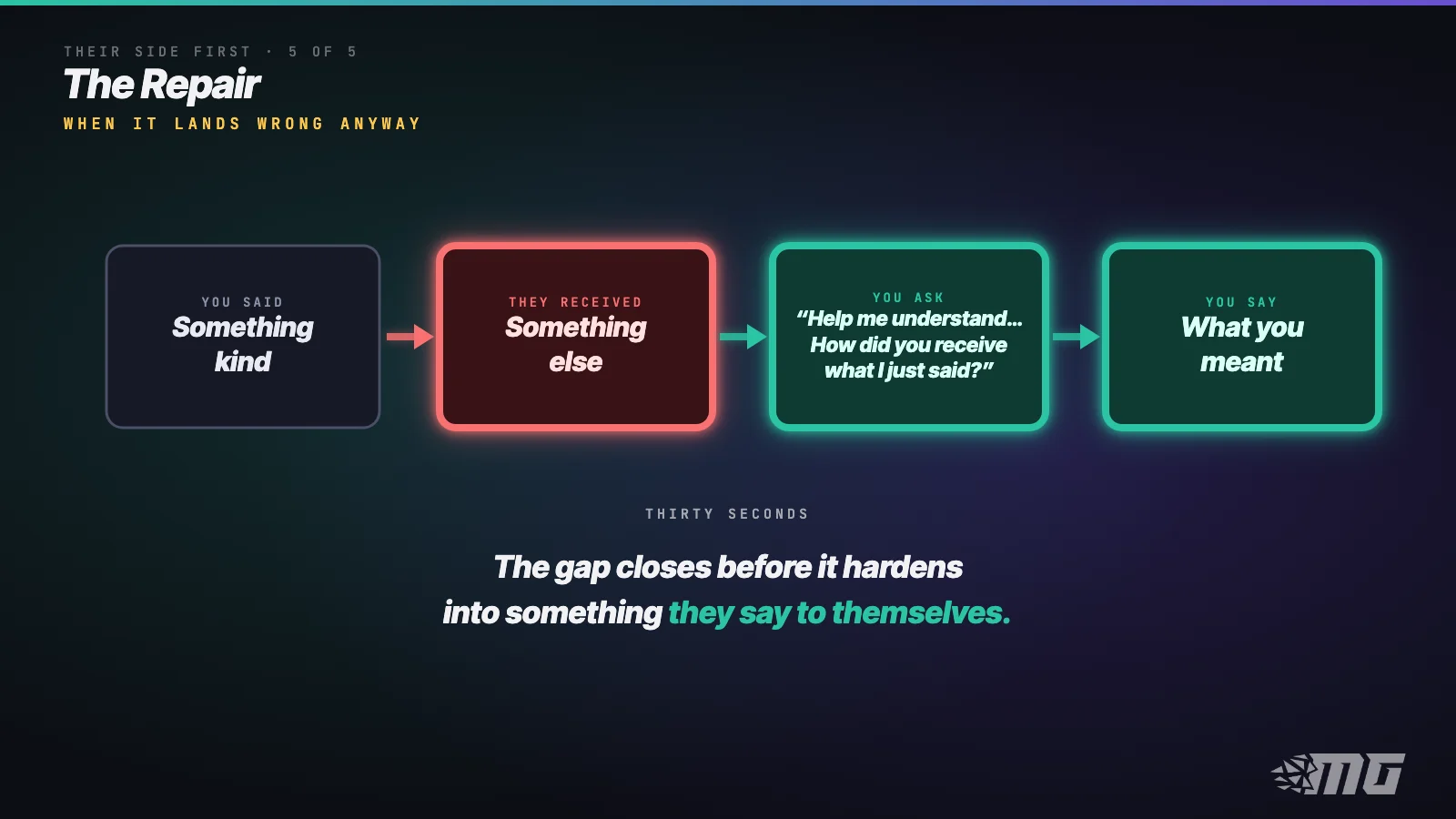
The repair is one question: "Help me understand… How did you receive what I just said?" Then tell them what you meant. Thirty seconds, and the gap between what you sent and what they got is closed instead of left to harden into something they repeat to themselves.
Your part in this is real: the questions you ask, what you leave unsaid, how you repair. That is the climate their inner voice grows up in.
But the voice itself is ultimately theirs. Learning to hear it, and to work through the hard moments in their own head, is their work to own, and no parent can do it for them. That is what training is for: the athlete taking complete responsibility for their own mind.
Your job, after a hard one, is their side first: get curious, validate, then ask what they need. Start with the next car ride.

Nate is Utah Swimming’s Official Mental Performance Partner. He works with age-group and elite athletes on the part of the sport nobody schedules — confidence, composure, focus, and what happens in your head behind the blocks. Everything here is free to Utah Swimming families and coaches.

One mental-performance tool for athletes, parents, and coaches — every month in the Utah Swimming newsletter.
Mental Grit provides mental performance training, not mental health care. When a need is clinical, we connect families with licensed professionals.
Mental Grit Consulting is an independent organization and the official mental performance partner of Utah Swimming.