
Nerves aren't a verdict, they're your body getting ready to race. Two things you can do behind the blocks: get big, and come back to right now.
You're behind the blocks. Two heats to go.
Your heart's pounding. Your hands are shaky. Your stomach is doing something it doesn't do at practice. Then the thought shows up: something's wrong with me. I'm not ready.
Nothing's wrong with you. That feeling is your body getting ready to race: a faster heart, quicker breathing, a jolt of energy. It doesn't mean you're about to swim badly. What happens next depends on what you do with it, and you've got two moves.
Your first race of the meet didn't go well. The next one is in twenty minutes. That's the challenge. Your thinking goes: I'm going to blow this one too. Your shoulders creep up, and your breathing gets high and fast. Now that thought feels even more true.
Stay in that space for the next twenty minutes and you're spinning yourself into what we call a doom loop.
But there are two things you can do to flip it, from spiraling down to spinning yourself up. It comes down to what you do with your body and what you do with your mind: two things you have complete control over.
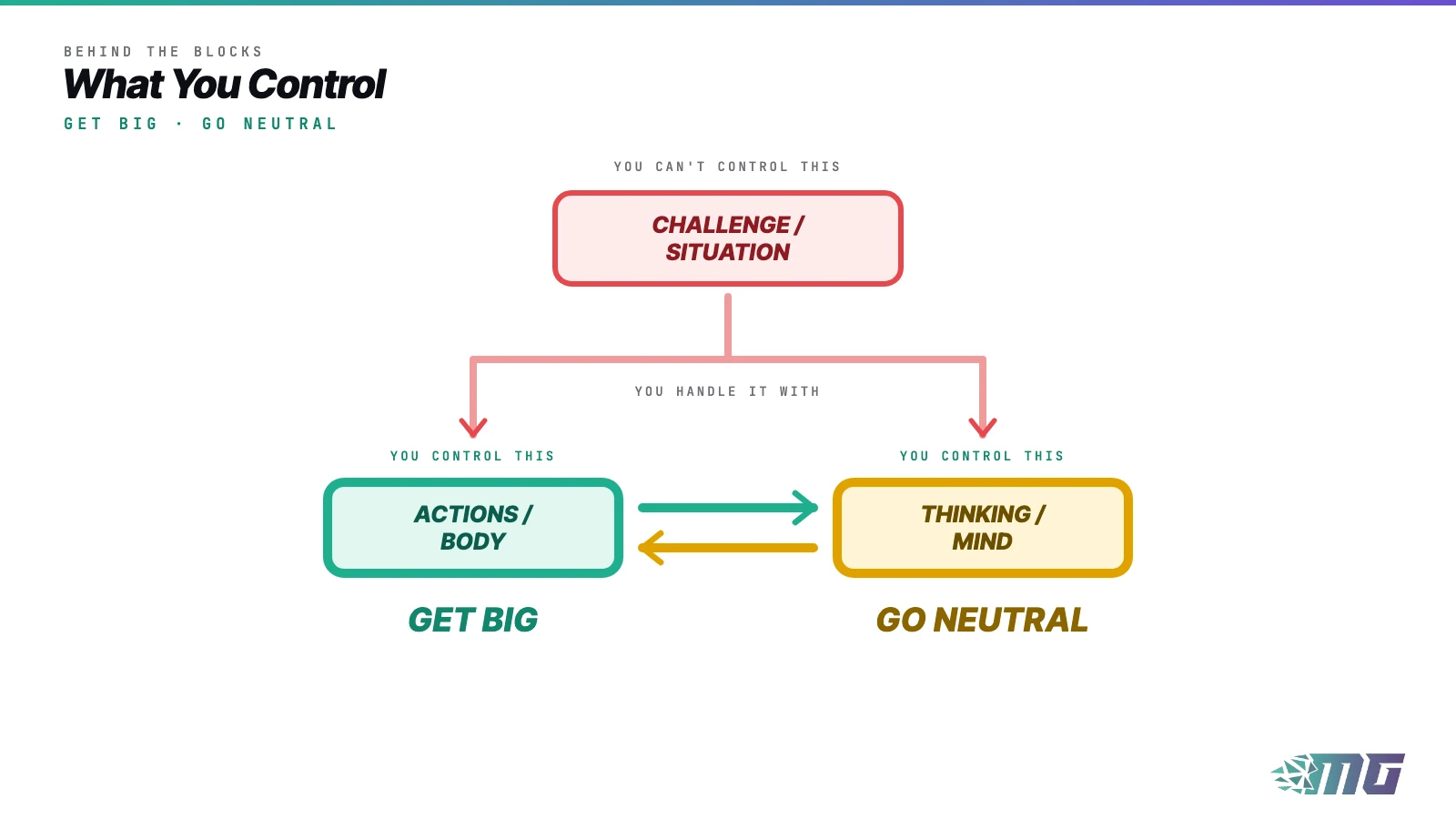
You can't control the challenge. But here's what a lot of athletes miss: working on just your body, or just your mind, isn't enough. You have to control both.
When things get hard, the easiest thing to do is shrink. Shoulders up, head down, arms folded, curled up on the bench. And when you're small, the negative stuff is really easy to believe.
Try this right now. Slump: shoulders forward, head down, and think I'm going to blow this. Now stand up. Chest open, head up, arms wide. Think it again.
Harder to believe, right? Your body doesn't just react to your brain. It talks back.
Watch an Olympic final right before the swimmers step up: arms swinging, shoulders rolling back, standing tall. You won't see many of them hunched over, staring at their feet.
So before your race: shoulders back, chest open, head up, feet planted. Take up space for 30 to 45 seconds. The bigger you are, the harder it is to believe the negative stuff.
Now you're big. Check what you're saying to yourself.
Red thoughts live in two places. I'm going to blow this is the future. I swam it badly last time is the past. But swimming doesn't happen in the past or the future. It happens right now.
Don't try to flip straight to I feel amazing. If you don't believe it, it won't stick. Go neutral instead: come back to what's true right now. Run the 5-4-3-2-1:
The breath is where you land. Breathe out first, all the way, then in low: into your stomach, then your chest.
Short on time? One of each, and still finish on the breath.
Try it now, wherever you're reading this. Then find something new every time you run it. If you say lane line, water, wall on autopilot, you're reciting, not noticing.
Your brain thinks one thought at a time. While you're really looking at that lane line, you're not thinking something's wrong with me. You don't have to feel positive to swim fast. Neutral is enough.
Before your hardest set at practice: get big, then go neutral. Tick a box on your card every time you do it, and see how many you can get by Sunday.
The red thought will probably come back. That's not failing. That's the rep. Mental toughness is noticing you're in the red and doing something about it, over and over again. Going from negative to neutral.
Your Get Big. Go Neutral. card has both moves and the 5-4-3-2-1 step by step. Keep it in your swim bag.
Your nerves aren't a warning. They're your body getting ready. You decide where they go.
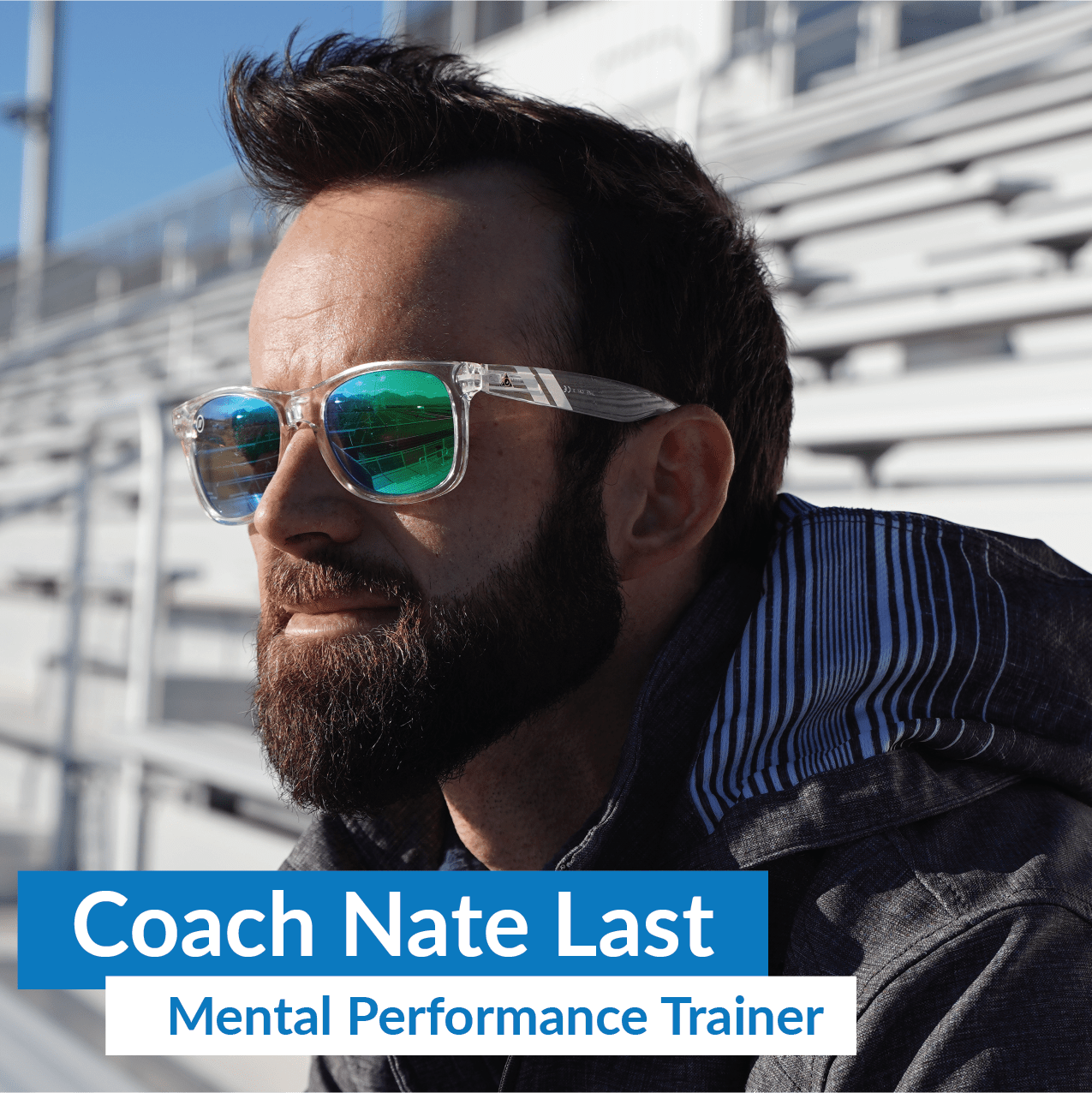
Nate is Utah Swimming’s Official Mental Performance Partner. He works with age-group and elite athletes on the part of the sport nobody schedules — confidence, composure, focus, and what happens in your head behind the blocks. Everything here is free to Utah Swimming families and coaches.

One mental-performance tool for athletes, parents, and coaches — every month in the Utah Swimming newsletter.
Mental Grit provides mental performance training, not mental health care. When a need is clinical, we connect families with licensed professionals.
Mental Grit Consulting is an independent organization and the official mental performance partner of Utah Swimming.