


One Thing at a Time
Five corrections in one set land as zero, and the ride home replays only the bad. How a teenage athlete’s attention actually works, and the one language change that fixes both.
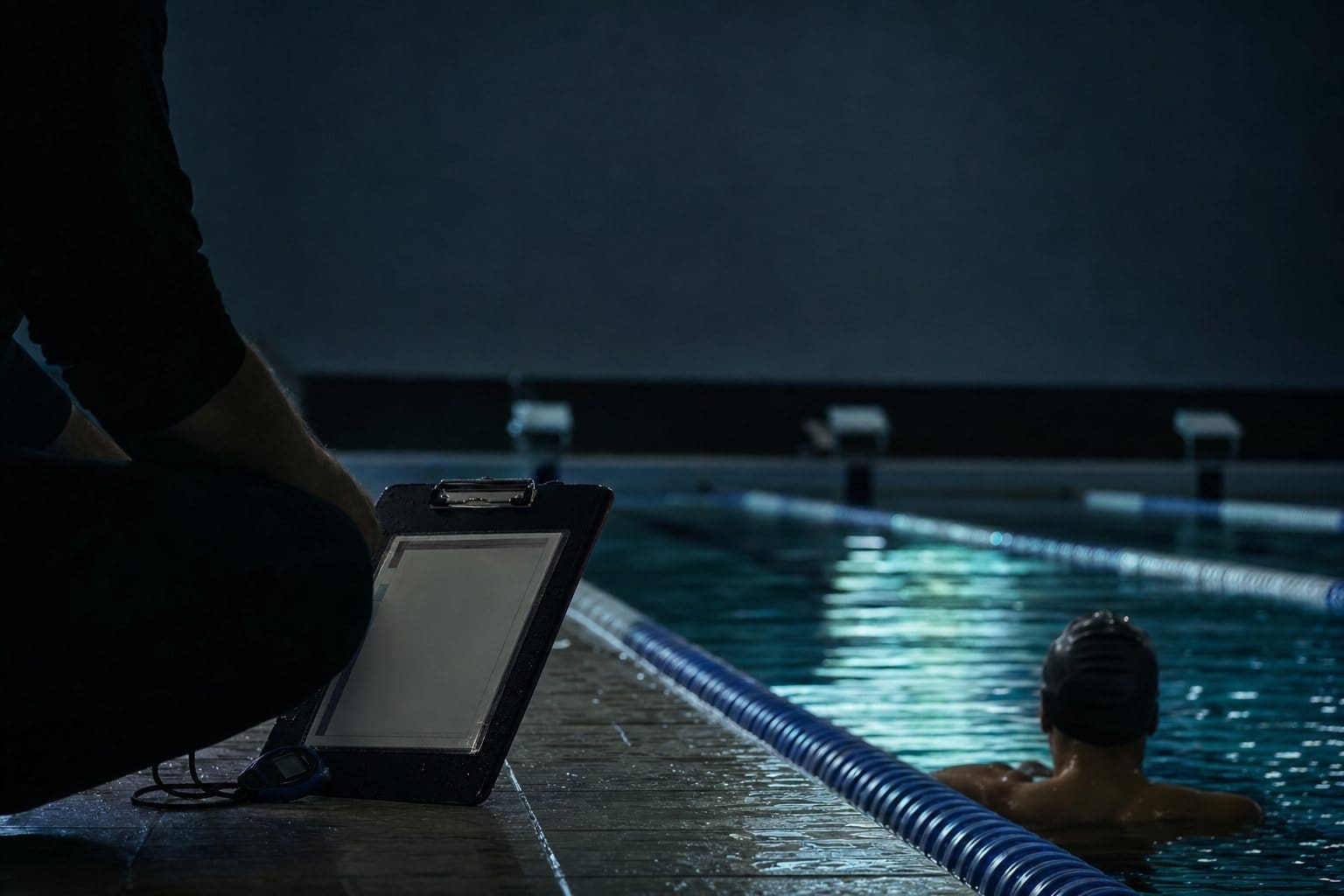
Picture your best fourteen-year-old on the wall between reps of the main set. In the fifteen seconds before the next send-off you give her three things: get your hands out front, three kicks off the wall, and stop breathing into the flags. All three are right. All three are things she needs.
She pushes off. She does one of them for a 25, maybe two, and then the set gets hard and the whole list is gone. Not because she did not listen. Because attention does not work the way we coach as if it does.
This month your athletes are learning how theirs works. Here is the same thing, from your side of the deck.
What attention can actually hold
Attention is a budget, not a spotlight you can point at everything at once. Under load — and the back half of a hard set is load — the budget shrinks, and whatever is not the single job in front of the athlete gets dropped. This has been measured for fifty years, and every coach has watched it: the more you ask for in one breath, the less of it arrives in the water.
There is a second finding underneath it that matters more for teenagers. Where an athlete points their attention changes the movement itself. A swimmer told to think about her hand entry moves differently from one told to think about pulling water past her hip, and neither is the athlete who swam it on feel. Attention is not a passive camera. It is an input.
So the first trap is not the athlete’s. It is ours. Five corrections in one set do not produce five improvements. They produce a swimmer who is technically focused on nothing, working hard, and getting nothing on board. She will leave that practice wrecked and no better, and she will not be able to tell you why.
When you are focused on everything, you are technically focused on nothing. That is the sentence your athletes are reading this month. The fix on your side is the mirror of the fix on theirs: one thing per athlete, per practice, and the instruction budget spent on that.
The ride home
The second trap happens after they get out.
Ask most swimmers what happened at practice and you will get a list of what went wrong. That is not pessimism, and it is not a character flaw. Bad information is louder than good — the brain weights a miss more heavily than a hit, holds it longer, and replays it more. The research on this is blunt: bad is stronger than good, in every domain anyone has looked.
Now add what practice feedback mostly is. Coaching is correction. It has to be — that is the job — and so for two hours the loudest signal an athlete receives is a catalogue of what was not right. Then they get in the car and do exactly what you would expect a brain to do with that: replay it. The good reps were there. If nobody named them, for most athletes they may as well not have happened.
Here is the part of your job nobody wrote down. Correction and confirmation are both feedback, and the athlete only keeps what gets named. Your swimmers can hear both from you. They can hear your push-off was tight all set and your breathing pattern fell apart on the last 50 in the same breath, and they need both — because left to themselves they will keep only the second one, and a swimmer who only knows what is broken walks onto the blocks with no idea what her weapons are.
You race fast by being great at what you are already great at. Some athletes can name what that is. Until the rest can, somebody has to tell them. On your deck, that is you.
What your athletes are carrying this month
So you are not guessing at it, here is the tool your swimmers have in their bag. It is called the Deliberate Practice Protocol, and it is two decisions a day.
Before they get in: one thing. Today I am going to focus on ___. One capability, chosen on the way to the pool while they are calm, so when the set gets hard they go back to something they already decided instead of inventing something new under load.
After they get out: three, one, one. Three things they executed well — capabilities, not outcomes, however bad the practice was. One thing that did not go well. One action for tomorrow. They write it, photograph it, and the ones who do this properly send it to their coach.
You will see it on your deck. A swimmer who tells you her one thing before warm-up is not being precious. She is doing the work. And a swimmer who sends you her three-one-one is handing you the single most useful piece of feedback you will get all week: what she thinks she is good at, in her own words.
The lesson under all of it: capability or outcome
If you take one thing from this article — and you should, for the reasons above — take this.
Almost every athlete, asked what they are working on, names an outcome. Go 1:05. Make the cut. Beat her. Drop time this weekend. Outcomes are fine. They give direction and they give hope, and we never tell an athlete to give them up. But an outcome is not something a swimmer can do in the next rep. It lives in the future and on a scoreboard, and pointing attention at it in the middle of a set is pointing it at nothing.
A capability is something they can execute on the next send-off, whether or not the outcome shows up. Three dolphin kicks off every wall. Breathe every three on the back half. Hold fourteen strokes per 25 on the last 100. Stay long through the first 25 of every rep. You could see it on video. It is inside their control today. They can do it on a bad day.
That is the whole distinction, and it is the one that makes everything else in this piece work. One thing has to be a capability, or the athlete is focusing on a wish. Three good things have to be capabilities, or they are just “I felt okay.” Feedback that names a capability gets kept; feedback that names an outcome gets filed under luck.
Three questions sort any answer an athlete gives you:
- Could they do it on a bad day? If it depends on how they feel or how fast they are, it is an outcome.
- Is it inside their control in this set? Not this season. This set.
- Would a video show it? If you could not point at it on tape, it is not specific enough yet.
And one language rule, which is the same rule your athletes are learning about their own self-talk: say what to do, not what to avoid. Don’t die on the last 50 gives the brain a picture of dying on the last 50. Hold your stroke count on the last 50 gives it a job. There is a lot more underneath that rule — why the brain cannot process a “don’t,” and what it does with the picture instead — and we will go further into it in a future article. For this month, the rule is enough.
What you can do, starting Monday
None of this asks you to add a session or run a curriculum. It asks you to spend the instruction you already give a little differently.
- Ask each athlete their one thing before they get in. Thirty seconds a lane. If they do not have one, help them pick one — one — and make it a capability.
- If they name an outcome, swap it. That’s an outcome. What would you have to do, today, in this set, to get closer to it? Pick that.
- One correction at a time. A second instruction in the same breath cancels the first. If you have three, that is three sets, not one wall.
- Name what they executed before you name what they missed. In capability words, specifically enough to be seen on tape. Some athletes will name it themselves; the ones running their three-one-one properly are learning to. Until they can, that is your job.
- Ask for the three-one-one. The athletes doing it properly will send it. Read it. It tells you what they think their weapons are, and whether they are right.
The card in the toolbox below puts all of this on one page for the clipboard. It is the coach’s half of the tool your swimmers already have.
You already coach this. This month it has a name and a structure, and your athletes are running it with you.
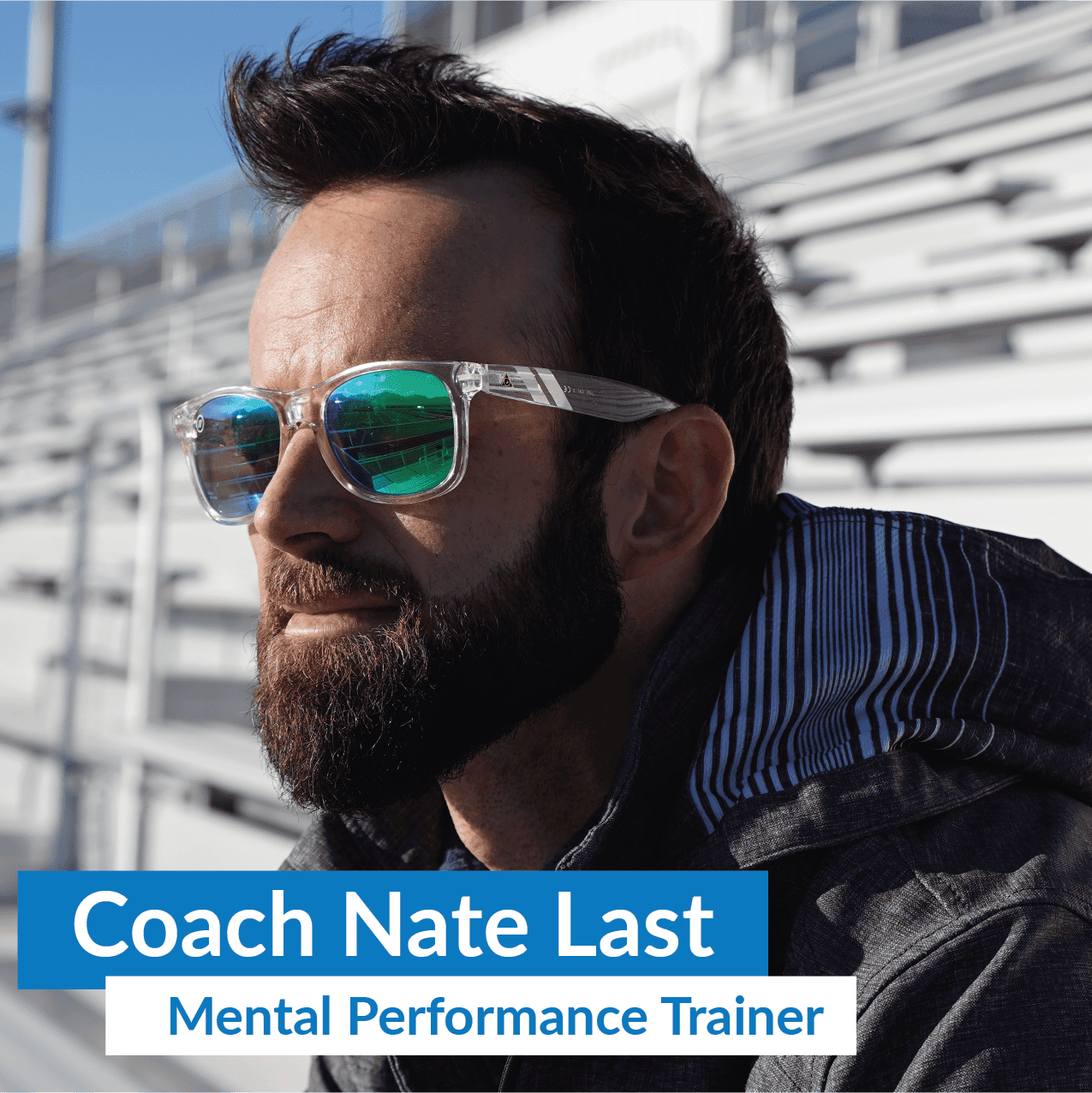
Nate Last — Mental Performance Coach
Nate is Utah Swimming’s Official Mental Performance Partner. He works with age-group and elite athletes on the part of the sport nobody schedules — confidence, composure, focus, and what happens in your head behind the blocks. Everything here is free to Utah Swimming families and coaches.

One mental-performance tool for athletes, parents, and coaches — every month in the Utah Swimming newsletter.
Mental Grit provides mental performance training, not mental health care. When a need is clinical, we connect families with licensed professionals.
Mental Grit Consulting is an independent organization and the official mental performance partner of Utah Swimming.